Planning a water excavation project in Calgary? Knowing how much ground can be covered in a single day will help you budget time and money. So will it take a day or three? Can everything get done before winter rolls in?
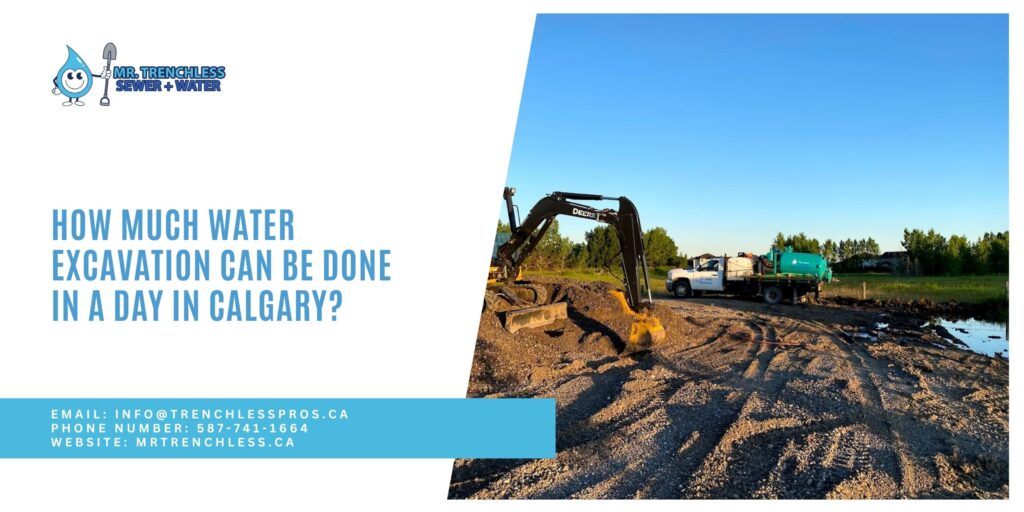
In short, water excavation is much faster than you think. In Calgary, a single hydrovac truck can remove 10 to 50 cubic yards of soil in a day depending on the conditions. For residential jobs, this is more than enough.
At Mr. Trenchless, we work on water excavation projects across Calgary every day. Here’s what determines how much can get done in a day.
Table of Contents
ToggleHow Much Water Excavation Can Be Done in a Day?
On average, a hydrotruck in Calgary can excavate 10 to 50 cubic yards of soil per day. It’s a wide range and actual output is based on soil conditions, depth, site access and weather.
Here’s what you need to know:
- Ideal Conditions (loose soil, shallow depth, easy access): 40 to 50 cubic yards
- Average Conditions (mixed soil, moderate depth): 20 to 35 cubic yards
- Challenging Conditions (clay, frozen ground, deep excavation): 10 to 20 cubic yards
For context, a residential potholing job might only require 1 to 2 cubic yards. Trenching for a new water service may need 5 to 10 cubic yards. Most residential projects come nowhere near a hydrovac’s daily capacity.
What Factors Determine Daily Water Excavation Output?
When it comes to how much soil can be removed in a day, several factors come into play. You have to consider:
- Excavation Depth: Shallow excavations are faster, while deep digs need more time to remove soil from the bottom and bring it to the surface. Deeper digs decrease your daily output.
- Number of Excavation Points: A single deep hole doesn’t take as long as multiple shallow holes spread across a site. Each new location requires repositioning the truck and equipment, adding up over the course of a day.
- Debris Tank Capacity: When the debris tank fills up, it should be emptied before work can begin. Larger tanks mean fewer trips to disposal sites and more excavation per day. Smaller tanks or distant disposal sites can delay projects.
- Hose Distance: When the hose from the truck has to run further from the dig site, the vacuum isn’t as efficient. Keeping the truck close to the excavation areas provides the best suction power and output.
- Disposal Location: If the disposal site isn’t close to your property, travel time takes away from excavation time, while a nearby disposal site leaves more time for digging.
How Does Soil Type Affect Daily Output?
Soil type affects productivity the most. Calgary has diverse soil conditions, which differ depending on the neighbourhood. Here’s a quick breakdown:
- Sandy or Loamy Soil: Easy to excavate, pressurized water quickly breaks apart this soil and a vacuum removes it. Daily output in sandy soil can easily reach 40 to 50 cubic yards under ideal conditions.
- Clay Soil: Because it’s sticky and dense, it takes longer for water to penetrate and break up this soil. The vacuum also has to work harder to remove the heavier slurry. Daily output can drop to 15 to 25 cubic yards.
- Rocky or Gravelly Soil: Rocks and gravel don’t break apart like soil. The water can loosen them, but larger stones take time to vacuum. Output depends on the rock size and density, which range from 10 to 30 cubic yards.
- Frozen Soil: Frozen ground is tough, but heated water can take care of it. The water melts and loosens the frost, letting excavation continue. Daily output in frozen conditions ranges from 10 to 20 cubic yards, depending on the frost depth.
Sometimes, it can be hard to tell just which type of soil you’re dealing with. Let us assess your site so we can give you a realistic estimate.
How Can You Maximize Water Excavation Output?
Want to excavate as much as possible in a day? Here’s how you should set up your project and know how much time will your excavation project will take:
- Consolidate Excavation Points: Group excavation areas close together to spend more time digging and less time repositioning.
- Ensure Close Truck Access: When the hydrovac truck can park closer to the dig site, its hose doesn’t have to run as far and has stronger suction.
- Use the Right Size Equipment: For larger projects, a truck with a bigger debris tank reduces disposal trips. Discuss equipment options with the contractor before the job begins.
- Plan for Disposal: Know where the soil is going. A nearby disposal site is quicker than hauling soil across the city.
- Batch Similar Tasks: If you have multiple excavation points with different depths, group similar ones together. Adjusting water pressure and technique takes more time and consistency can help the project run more smoothly.
- Avoid Waterlogged Conditions: Scheduling water excavation right before heavy rain is never a good idea. This leads to saturated, heavy soil. If possible, wait a day or two.
Schedule Your Water Excavation in Calgary Today
How much water excavation can be done in a day in Calgary? In ideal conditions, a hydrovac truck can remove 40 to 50 cubic yards of soil. That’s way more than most residential projects need. At Mr. Trenchless, we’re here for all your water excavation needs. We can help whether it’s a small utility location or a large commercial job.
Ready to get started? Contact us for a project estimate today!