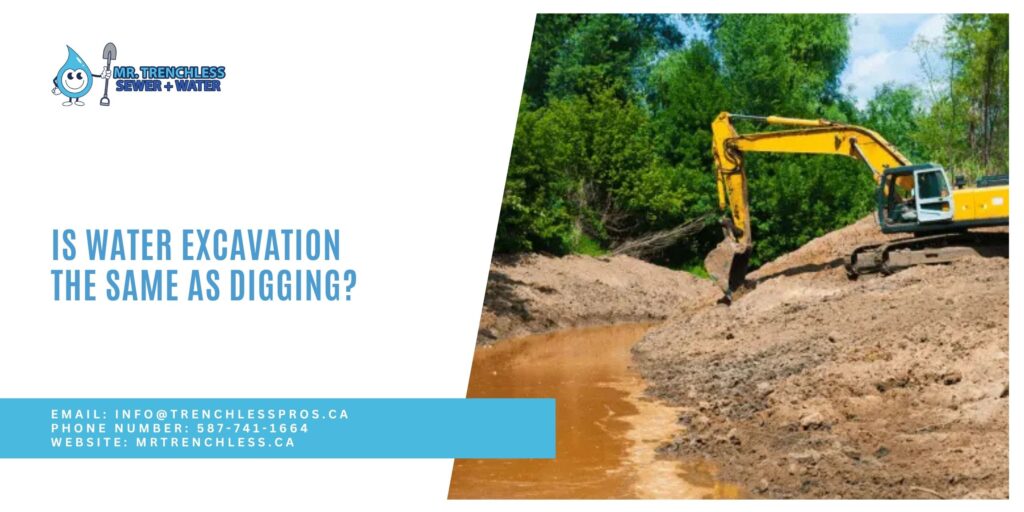
Excavation plays a critical role in a wide range of construction projects, from installing fence posts to laying major utility lines. Essentially, it is the process of removing soil or other debris from the ground to prepare an area for underground work. Not all excavation methods are created equal, which is why more contractors are turning to professional water excavation contractors in Calgary like Mr. trenchless for the job instead of traditional digging
So, what’s the difference? Isn’t water excavation the same as digging? The short answer is no. While both methods involve removing soil, they are very different techniques suited for different situations. Understanding the difference can help you choose the safest, most efficient option for your project.
Table of Contents
ToggleWhat is traditional digging?
Traditional mechanical digging is a method of excavation that uses manual tools or heavy machinery to physically break apart and remove the soil from the ground using force. This is what most people picture when they think of excavation.
Digging typically involves equipment such as:
- Backhoes
- Excavators
- Trenchers
- Shovels
Traditional digging is commonly used for:
- Building foundations
- Road construction
- Installing large drainage systems
- Basement excavations
- Land clearing and site preparation
Traditional digging can be effective and fast, especially when working in large open areas with no underground obstacles. However, it comes with risk, particularly when utilities such as gas, water, or electrical lines are located beneath the surface.
What is water excavation?
Water excavation, often called hydrovac or hydro excavation, uses pressurized water to break up soil. A powerful vacuum system then extracts the resulting slurry into a debris tank for removal. Instead of tearing into the ground with heavy machinery, water excavation gently loosens the soil, making it a non-destructive digging method. As such, it’s considered one of the safest excavation methods, especially when working around underground infrastructure and utilities.
The main equipment involved in water excavation includes:
- A hydrovac truck
- A high-pressure water system
- A vacuum system
- A debris tank
- Flexible hoses and nozzles
Water excavation is commonly used for:
- Locating underground utilities (potholing)
- Safely exposing underground utilities (daylighting)
- Pole and sign installation
- Working in tight or congested spaces
- Digging in frozen ground
Water excavation is ideal when underground utilities are present, precision is critical, and safety is a top concern.
Is water excavation the same as digging?
No, while both water excavation and traditional digging are both ways of removing soil from the ground, the difference lies in how they do it and what they’re best suited for.
Let’s take a closer look at the key differences:
1. How They Remove Soil
- Digging relies on physical, mechanical force to break apart and remove soil. Equipment like excavators, backhoes, trenchers, or skid steers uses metal buckets, teeth, or blades to cut directly into the ground. The soil is lifted and moved aside or loaded into a truck for removal.
- Water excavation uses pressurized water to loosen and break up soil, turning it into a slurry. A powerful vacuum system then pulls the slurry into a debris tank, where it’s stored until disposal.
2. What They are Best Suited For
- Digging is faster and more cost-effective for large-scale excavation, including basement excavation or land clearing. If the area is clear of underground utilities and has already been verified as safe, traditional digging can be the more efficient and practical option. Digging is best when cost or speed is a priority.
- Water excavation is ideal when underground utilities, including gas lines, water mains, fibre optic cables, or electrical lines, are present. It is commonly used to verify and expose the exact location and depth of buried infrastructure, significantly lowering the risk of utility damage. Because hydrovac systems can use heated water, they are especially useful in winter conditions, when digging equipment might struggle with frozen soil. Water excavation is best when precision and safety are top priorities.
Can water excavation and digging be used together?
Yes, in many construction projects, water excavation and mechanical digging can absolutely be used together. Hydrovac in Calgary can be used to locate and confirm the exact position of underground utilities and safely expose critical infrastructure before heavy digging equipment hits the site for mass soil removal. When combined, the two methods create a safer and more efficient jobsite operation.
Water excavation and traditional digging both move soil, but they are not the same. If you’re unsure which method is best for your next project, we’re here to help. Contact us at Mr. Trenchless in Calgary for more information.