How long have you lived in your home? Even if it’s been a decade or two, you’ve likely never given your drain pipes a second thought, that is, until something goes wrong. Chances are, if you have a slow drain or gurgling noise, you’re likely wondering if there’s a minor clog or a much bigger problem hiding underground.
Drain pipes don’t last forever. In Calgary, some local factors wear them down faster than homeowners expect. Let’s jump into drain pipe lifespan, warning signs a drain pipe replacement is coming and what your options look like when it’s time to act.
Table of Contents
ToggleHow Long Do Drain Pipes Last?
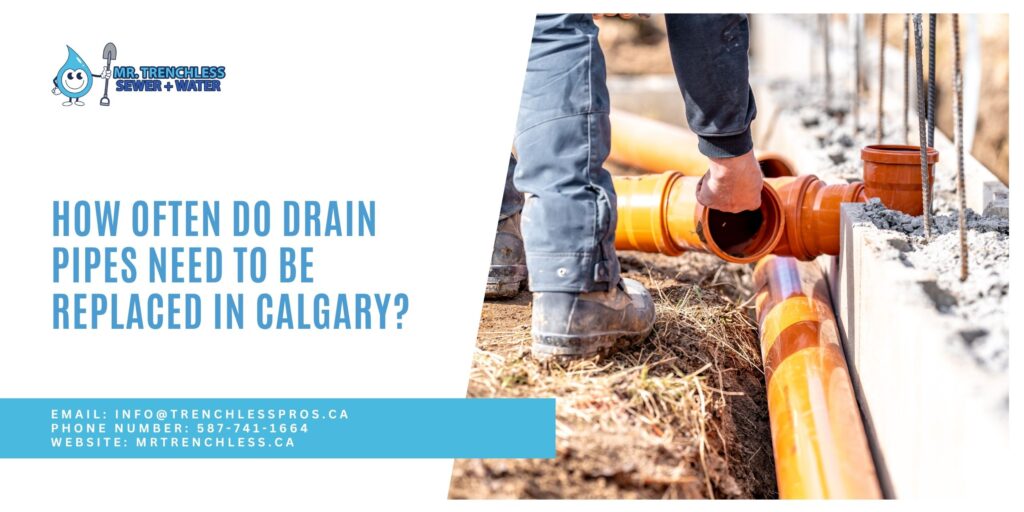
The lifespan of your drain pipes depends on the material they are made of. Most Calgary homes were built using one of these common materials:
- Cast Iron Pipes: Standard in homes built before the 1970s, they’re durable, but prone to rust and corrosion over time. Generally, they last 30-100 years, but many are already well past their best-before date in older Calgary neighbourhoods.
- Clay or Orangeburg Pipes: It’s common to find clay in Calgary’s early residential builds. Orangeburg is a paper-and-pitch composite material used as a post-war shortcut that deteriorates quickly and often fails well before the 50 year mark. If your home was built between the 1940s and 1960s, it’s worth investigating.
- ABS and PVC Plastic Pipes: Standard from the 1970s onward, these are your lowest maintenance pipes. They last 50-100 years under normal conditions.
By knowing what pipes you have, it makes it easier to know when to replace them. Some don’t last as long as others if you’re living in an older build, it’s worth investigating.
Why is Calgary Hard on Drain Pipes?
Calgary’s climate and soil conditions are rough on your pipes. Because of this, homeowners face challenges that those living in milder climates don’t. Look out for the following:
- Freeze-Thaw Cycles: Putting stress on underground pipes every winter and spring, the ground shifts, pipes can crack, separate at joints and collapse, especially when older materials have already weakened.
- Clay-Heavy Soils: Still common in Calgary neighborhoods, this soil expands when wet and contracts when dry. As a result, it creates ground movement that puts lateral pressure on buried lines as time passes.
- Tree Root Intrusion: This problem is common in many Calgary communities. When roots seek out moisture, they find their way into hairline cracks, breaking pipes apart from the inside.
- Hard Water: It’s a reality in Calgary. Mineral buildup inside pipes, especially in older metal ones restrict flow and accelerate interior corrosion.
Most of these problems aren’t visible to the naked eye. However, homeowners across Calgary deal with them every day.
What Are Signs You Need to Replace Your Drain Pipes?
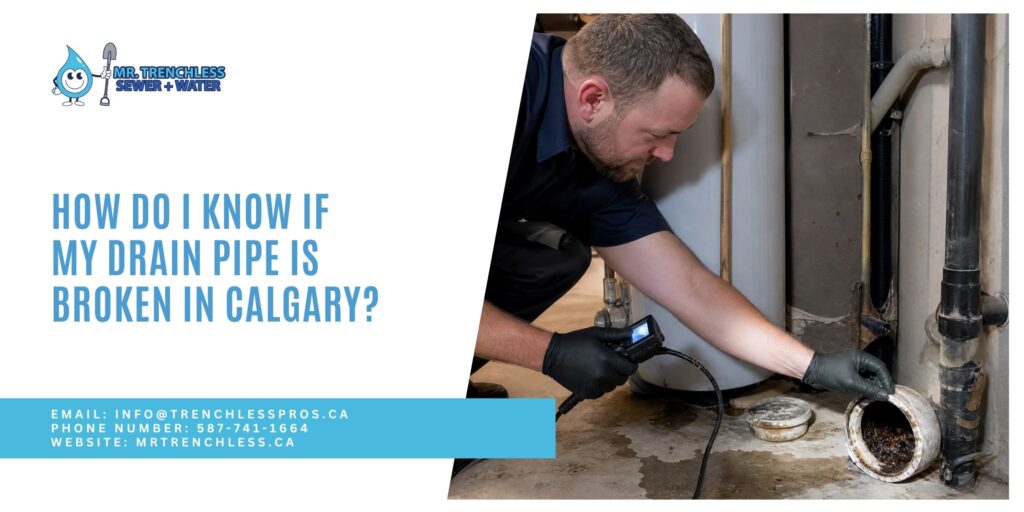
If you suspect a problem, you don’t have to dig up your yard. Look out for the following;
- Slow Drains throughout the House: If you’re having problems with multiple fixtures, it’s often an issue with the main line, not just a local clog.
- Gurgling or Bubbling Sounds: Usually coming from drains or toilets, it can indicate a blockage or compromised venting.
- Sewage Odours: Inside or outside the home, it means gases are escaping where they shouldn’t be.
- Wet Patches or Unusually Green Areas in Your Yard: If these show up during dry periods, there’s likely a leaking or broken underground line.
- Recurring Backups: If you keep having problems after clearing out a clog and are calling a Calgary plumber every year, the pipe itself may be failing.
- Visible Rust, Staining or Corrosion: When any of these show up on exposed sections of drain pipe in your basement, you should be worried.
- Foundation Cracks or Shifting: This happens where drain lines run beneath your home.
Any of these signs showing up on their own might be explainable. When multiple show up, get some eyes on your system.
Do You Always Need a Full Replacement?
You don’t always need to replace the entire pipe. The right solution comes down to what’s happening inside the pipe. Here are your pipe repair and replacement options in Calgary:
- Spot Repair: When damage is isolated to a short section and the rest of the line is in reasonable shape, it’s a possibility.
- Pipe Bursting: This trenchless repair method replaces a failing pipe by pulling a new one through the old one, breaking the old pipe outward as it goes. It’s popular for homeowners who want to avoid the cost and disruption of digging up landscaping, driveways or interior flooring. This is our specialty at Mr. Trenchless.
- Full Excavation and Replacement: Generally, this is only necessary when pipes have failed extensively, when the material is beyond saving or when access and ground conditions make trenchless methods impractical. We can also take care of full residential excavation so the right call depends on your situation, not what’s easier to sell.
Everyone has different pipes in their homes. When you call us, we’ll investigate and tell you which option makes the most sense for you.
How Much Does Drain Pipe Replacement Cost in Calgary?
The prices will depend on the pipe material, depth, length, access and method. Trenchless approaches like pipe bursting tend to be more affordable when you factor in landscaping restoration and the disruption of traditional excavation.
The most reliable way to get an accurate picture is a proper assessment of your line before any work is quoted. Look out for estimates given without a site visit.
When Should You Call a Professional?
Is your home more than 30 years old? Have you ever had your drain lines inspected? It’s important knowing what’s down there before a problem forces your hand. Whether it’s an emergency or a routine inspection, turn to Mr. Trenchless in Calgary. We serve Calgary and surrounding areas with 24/7 availability.
Are you dealing with an active backup or want to know the condition of your lines before something goes wrong? Contact us today!