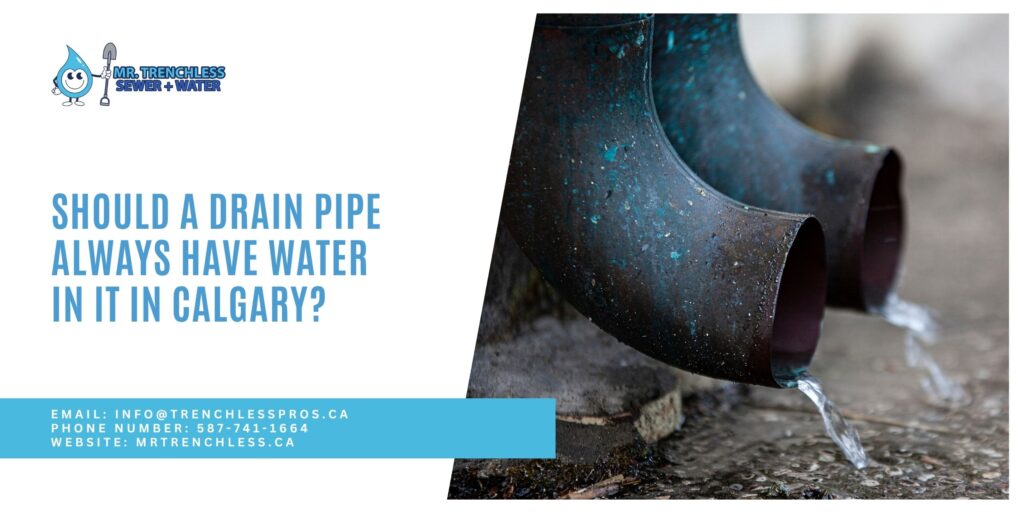
Ever looked down a drain or caught a glimpse of an exposed pipe during a renovation? It might’ve left you asking, “is there supposed to be water in there?” It’s a question that’s more common than you think. The answer? It comes down to the pipe and where it sits in your drainage system.
At Mr. Trenchless, we want you to know what’s normal and what’s not. It can help understand if there’s a problem or if something is working as it should.
Table of Contents
ToggleWhy Don’t All Drain Pipes Work the Same Way?
Your home’s drainage system is complex. It’s made up of several different types of pipes that each have their own specific job. Some can hold water permanently. Meanwhile, others should stay dry between uses. Knowing the difference is the first step toward understanding whether what you’re seeing is normal.
Which Pipes Should Always Have Water in Them?
In your Calgary home’s drainage system, two pipes should always have water in them. If the inside of these pipes are wet, you don’t have to worry about anything. Here’s a quick overview:
P-Traps
These U-shaped sections of pipe are located beneath sinks, tubs, showers and floor drains. By design, they hold a small amount of standing water at all times. That water creates a seal that blocks sewer gases such as hydrogen sulphide and methane from making their way back up your drains and into your living spaces. What happens if a p-trap dries out? Those gases can enter your home and create a nasty rotten egg smell.
Floor Drain Traps
Floor drain traps work similarly. In Calgary basements, they commonly retain a small amount of water. If you rarely use the floor drain, pour a cup of water down it to keep the trap seal intact, especially during the winter when dry indoor air accelerates evaporation.
Which Pipes Should Not Have Standing Water?
Other times, pipes shouldn’t hold any standing water at all. If you notice water sitting in these pipes, you likely have a problem. Look out for the following:
Drain Lines and Sewer Laterals
These pipes carry wastewater away from your fixtures and out to the city main, it should flow freely and not leave behind standing water. If water begins pooling or sitting inside these pipes, there’s a problem. A properly functioning drain line moves waste and water through continuously, leaving the pipe largely empty between uses.
Weeping Tile and Perimeter Drainage
The systems collect and redirect groundwater away from your foundation, not hold it. Standing water inside weeping tile can be a sign of a blockage, a collapsed section or a failed sump system.
Vent Pipes
You should never find standing water inside these pipes. They run vertically through walls and exit through the roof to let air into the drainage system so water flows freely. When there’s water in a vent pipe, a blockage or improper installation is often the culprit. In Calgary, an ice dam could be forming at the roof exit during the winter.
What Does Standing Water in a Drain Pipe Actually Mean?
Is water sitting where it shouldn’t be? Here are some of the most common problems:
- Blockage or Buildup: Over time, grease, hair, mineral deposits and debris can accumulate slowing or stopping drainage entirely, causing water to back up and pool inside the pipe.
- Bellied Pipe: This happens when sections of pipe shift or sink to create a low point where water collects. It’s a structural problem, not a clog so clearing it won’t fix the underlying issue. In Calgary, freeze-thaw ground movement can cause pipe bellying.
- Root Intrusion: When tree roots enter a pipe seeking moisture, it restricts flow and water backs up behind the obstruction.
- Pipe Collapse or Damage: When a pipe section cracks, crushes, or collapses, water pools at the point of failure. Calgary has clay-heavy soils and seasonal ground movement makes it more common than homeowners think.
- Venting Problem: When there isn’t enough airflow, drain pipes can’t move water through them. When a vent pipe freezes or gets blocked, it can slow drainage and leave standing water behind.
At Mr. Trenchless, we can help you discover these problems. Our inspection service will help diagnose the issue and recommend the right solution.
What Calgary-Specific Factors Affect Drain Pipe Water Levels?
Living in Calgary presents its own set of challenges for your drain pipes. Here are problems that are more common here than in other cities:
- Freeze-Thaw Cycles: Ground movement happens every winter and every spring. This causes pipes to shift, breaks seals and creates bellied sections and joint separations that lead to standing water and recurring backups.
- Hard Water: By leaving behind mineral deposits, it gradually narrows the interior diameter, slowing flow and contributing to pooling.
- Cold Winters and Dry Indoor Air: This causes P-trap water to evaporate faster, especially in lesser used fixtures. Beyond being unpleasant, a dried-out trap is also a health concern.
- Clay-Heavy Soil: Because it expands and contracts with moisture changes, it puts constant lateral pressure on buried lines and accelerates wear on older pipe materials.
When Should You Be Worried?
There are telltale signs that you need to call in a professional to fix the problem. Pick up the phone if you notice:
- Water backing up into multiple fixtures at once, this is usually a main line issue
- A persistent rotten egg or sewage smell, even after running water down the drain
- Slow drains that don’t clear up on their own or after basic clearing attempts
- Wet patches in your yard during dry weather
- Gurgling sounds coming from drains or toilets
- Water pooling around a floor drain in your basement
When there are problems deeper in the systems, they won’t resolve themselves. In many cases, ignoring them will only make things worse.
What Are Your Options If Something Goes Wrong?
When you call a professional to assess your lines, repair options vary. Ultimately, they come down to the cause of the problem and where it is. These are best ways to fix problems:
- Pipe Bursting: The trenchless repair method replaces a failing underground pipe without the need for open excavation. It’s best for failures when the pipe needs to be fully replaced. At Mr. Trenchless, it’s one of our specialties.
- Hydrovac Excavation: Going with this option means safely exposing underground pipes for inspection or repair without damaging surrounding utilities or landscaping.
- Full Excavation and Replacement: When there’s extensive pipe failure or when the location and depth of the problem makes trenchless methods impractical, this is the way to go.
P-trap issues? If you’re dealing with dried seals, damaged traps or venting problems, fixes are generally less involved. That said, a proper assessment is still important to correctly determine the cause of the problem.
Wondering About Water in Your Drain Pipes?
Some drain pipes should hold water, but others won’t. When water shows up where it shouldn’t be or disappears from where it should be, your drainage system is trying to tell you something. In Calgary, ground conditions and seasonal weather changes put extra stress on underground infrastructure. At Mr. Trenchless, we get that. That’s why it’s important to take those signals seriously before a manageable problem gets expensive.
Worried about water being in or not showing up in your drain pipes? Contact us to schedule an inspection today.