When a drain line starts acting up, it’s time for an inspection. While that sounds simple, there’s more than one way to inspect a line. Some methods use a camera, others use smoke or dye, and others answer an entirely different question. Knowing the differences helps you understand what you’re paying for.
At Mr. Trenchless, we start each drain job with a camera inspection. The right repair begins with the right diagnosis. Today, we’ll get into the most common types of pipeline inspections, what each one does and how to decide which makes the most sense for your Calgary home.
Table of Contents
ToggleWhat Are the Main Types of Pipeline Inspections?
Generally, pipeline inspections fall into one of two categories: methods that let you see inside the pipe, and methods that test how the pipe behaves. Here’s a quick breakdown:
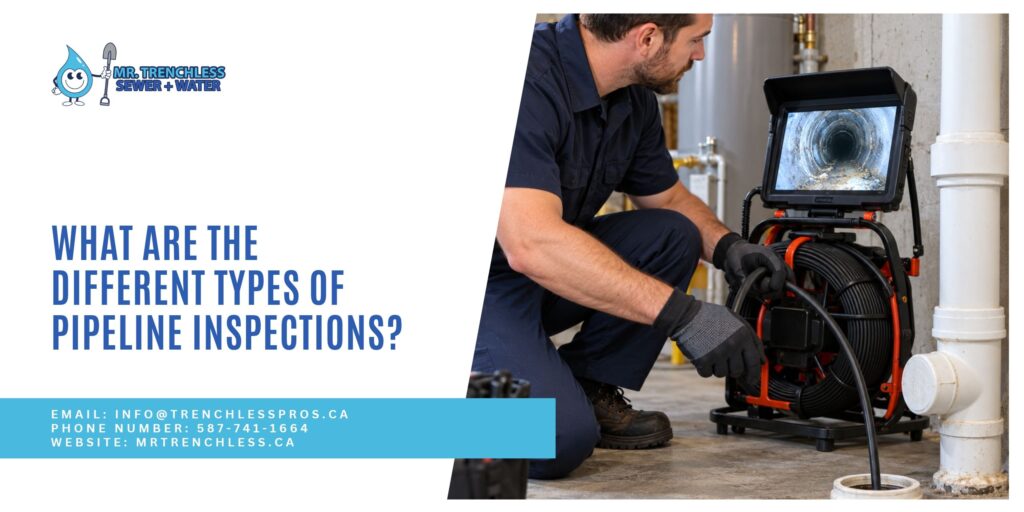
- Push Camera Inspection: A camera on a flexible rod is pushed through the pipe.
- Crawler Camera Inspection: A wheeled or tracked camera drives through the pipe.
- Pipe Locating: A transmitter on the camera head lets the crew trace the pipe from above ground.
- Smoke Testing: Non-toxic smoke is pushed through the system to reveal leaks and openings.
- Dye Testing: Coloured water is used to trace where water goes.
- Pressure or Leak Testing: The line is tested to see whether it holds water or air.
Each type of pipeline inspection has its own process and purpose, and the right one depends on the problem you’re trying to solve.
What is a Push Camera Inspection?
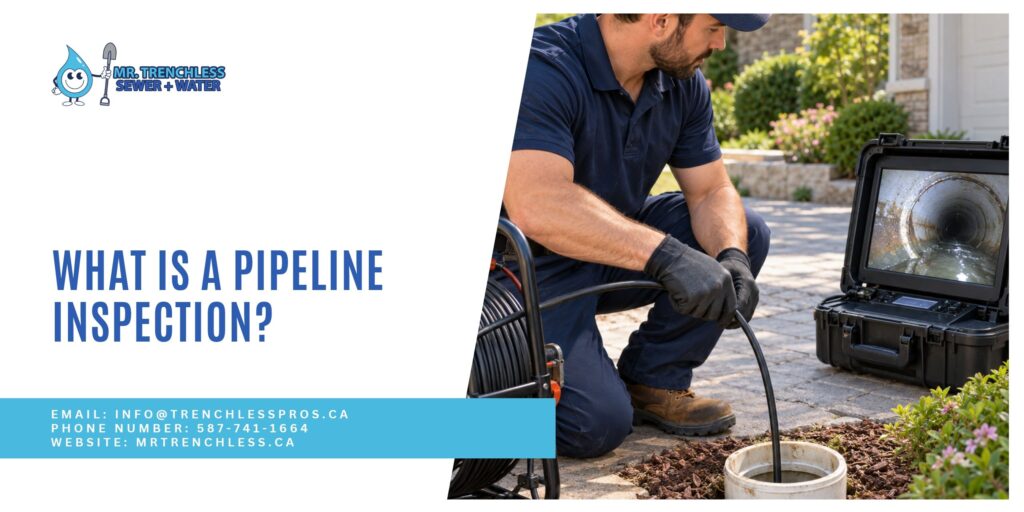
A push camera inspection is the most common way to determine whether a pipe repair or replacement is necessary. It’s what Calgary homeowners mean when they mention a “camera inspection” or “sewer scope.” It’s simple: a small, waterproof camera on a flexible line is fed into the pipe through an access point such as a cleanout, providing a real-time view of the pipe’s condition.
It’s ideal for the lines found in most Calgary homes and can help find cracks, joint separations, root intrusion, bellied sections, blockages and collapses. In most homes, it’s the inspection that shows what’s wrong with the pipe.
What is a Crawler Camera Inspection?
Rather than being attached to a rod, a crawler camera uses a camera on a small wheeled or tracked unit that drives through the pipe under its own power. It’s most common in large-diameter lines and longer runs where a push rod wouldn’t be able to reach or hold a steady position.
In most residential drain lines, a push camera will do the job. Crawlers are common in larger commercial or municipal-scale lines, which is worth knowing if you own a commercial property.
What is Pipe Locating?
Finding a problem is only the start. It’s important to know where the issue is so a crew can fix it. Many cameras are paired with a locating transmitter, known as a sonde, that sends out a signal a crew can follow from the surface. It shows the position and depth of the pipe underground.
In Calgary, locating answers where the break is, which decides where, and whether, anyone needs to dig. It can be the difference between a targeted repair and opening up the wrong section of yard. Full excavation is generally a last resort. That said, hydrovac excavation can safely expose the exact spot without disturbing surrounding landscaping or utilities.
What is Smoke Testing?
Smoke testing doesn’t use a camera. Non-toxic smoke is pushed through a section of the sewer system, and a crew watches where it escapes. Smoke showing up in the yard or near the foundation points to a crack, a broken connection or an opening in the line.
It’s best at finding leaks and openings across a wider area, and it’s a useful second opinion when a camera can’t reach part of the system. It shows that something is leaking, but not what the pipe looks like inside.
What is Dye Testing?
Dye testing shows where the water is going. First, coloured, non-toxic dye is flushed or poured into a fixture or drain, and from there, a crew watches where it appears. It’s an effective way to determine whether water is escaping where it shouldn’t and helps track down connections that aren’t where you’d expect.
It’s best used alongside other methods since it answers a narrow question and doesn’t show you the whole pipe.
What is Pressure or Leak Testing?
Some inspections are less about how the pipe looks and more about whether it holds. In a pressure or leak test, a section of line is filled with water or air, and a drop in pressure points to a leak somewhere in that section.
It confirms a leak exists. It doesn’t show you where or why, which is why it’s commonly paired with a camera.
How Do You Choose the Right Type of Inspection?
In Calgary, the choice depends on the problem. Here are some examples:
- You Have Slow Drains, Recurring Backups or Gurgling Toilets: A push camera inspection is the place to start. It shows what’s happening inside the line.
- You Know There’s a Problem, But Need to Pinpoint It: Pairing a camera with pipe locating shows what’s wrong and where, so any repair can be targeted.
- You Suspect a Leak, But the Camera Can’t Explain It: Smoke, dye or pressure testing can confirm where the water is going or escaping.
- You’re Buying an Older Home: A camera inspection shows what the inside of the drain line looks like. This matters in Calgary, where many homes were built before the 1970s, so they might still have the original clay, cast iron or Orangeburg pipe.
One method isn’t always enough. A good diagnosis often combines two. The camera shows the condition, and the second method confirms the location or leakage.
Why Does the Right Inspection Matter in Calgary?
Calgary’s ground conditions affect your pipes and the solutions needed when problems are found. When the ground is frozen, digging is slower and harder, which is why knowing the exact location of a break before anyone breaks ground matters even more. That’s where a camera paired with pipe locating makes a difference.
Age also comes into play. Many Calgary homes were built before the 1970s, and the only way to know what’s underground is to book a camera inspection. Smoke, dye and pressure testing are the best follow-ups once you know what you’re dealing with.
Ready to Learn What’s Going On Underground?
There isn’t a universal way to inspect a pipeline, but the goal is always to provide a clear answer before anyone starts digging. Once you know what the problem is and where it is, the right repair, whether trenchless or excavation, comes next. When you choose Mr. Trenchless, we start every job with an honest assessment and recommend what your pipes need.
Have a problem you can’t see? Contact us to schedule an inspection today.