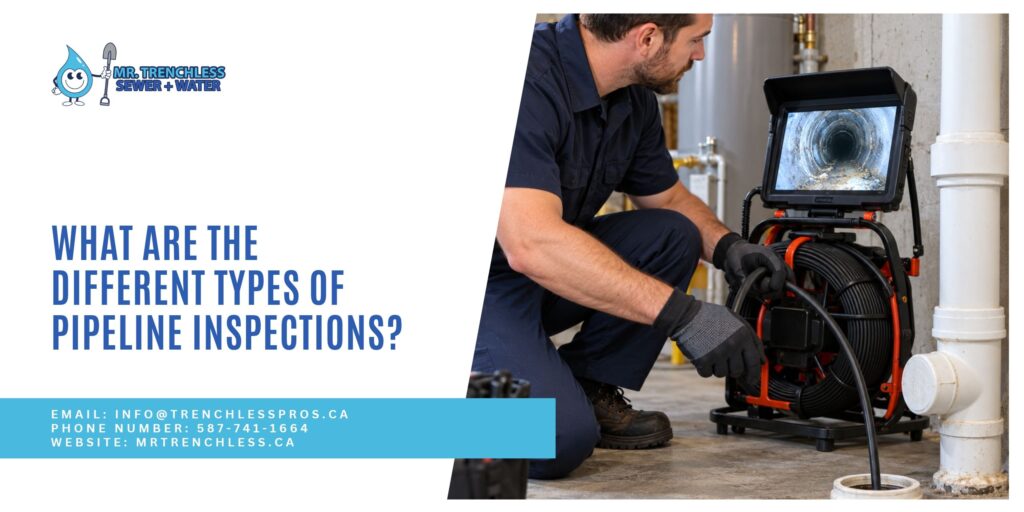
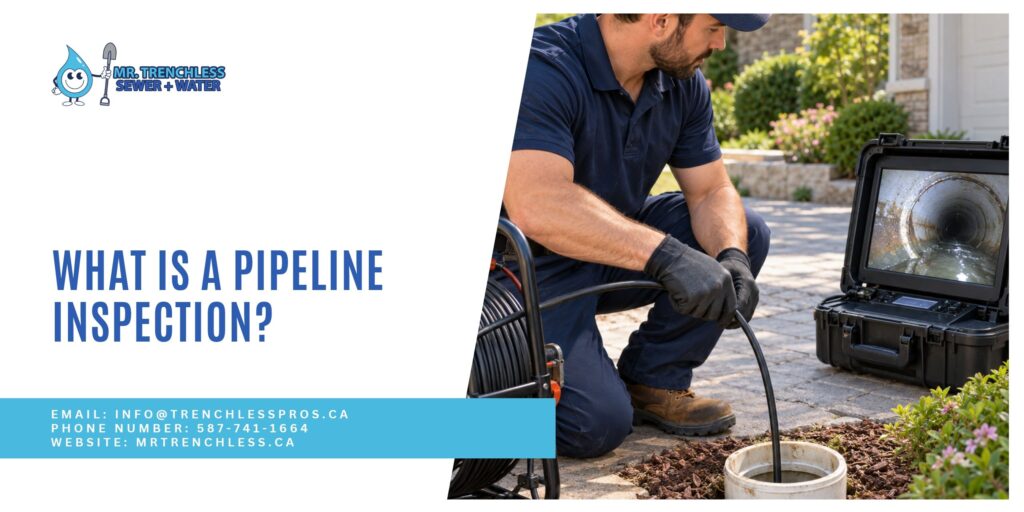
When it comes to your plumbing system, “it’s easy to say out of sight, out of mind, right?” Drain lines run under your basement floor, through your yard and out to the city connection. You only find out something is wrong when a backup or a soggy patch of lawn forces the issue. A pipeline inspection, also called a camera inspection or sewer scope, uses a small waterproof camera to look inside your underground pipes without excavation.
So what is a pipeline inspection, what does it involve and when should Calgary homeowners book one? At Mr. Trenchless, a camera inspection is the start of nearly every drain job because a repair is only as good as the diagnosis behind it. If you need our pipe repair and replacement services, we tell you upfront. Here’s what to expect and why Calgary’s conditions are worth knowing about.
Table of Contents
ToggleWhat Can a Pipeline Inspection Find?
A camera inspection shows what isn’t visible above ground including:
- Cracks and Breaks: Hairline fractures and full breaks in the pipe wall
- Joint Separations: Gaps where pipe sections have pulled apart
- Root Intrusion: Roots that have worked their way into the pipe
- Bellied Sections: Low spots where the pipe has sagged and water collects
- Blockages: Buildup or debris restricting flow
- Collapses: Sections of pipe that have caved in
- Corrosion and Deterioration: Wear in older pipes
The most important part of the inspection is exposing the location of the problem. That’s the difference between a targeted repair and digging in the wrong spot.
Why Are Pipeline Inspections Important in Calgary?
Calgary shows no mercy when it comes to underground pipes. Our freeze-thaw cycles between seasons put constant stress on buried lines because the ground freezes and expands in winter and thaws and shifts in spring, gradually cracking joints and creating separations. Meanwhile, clay-heavy soil will swell when wet and contract when dry.
Next, there’s what’s already in the ground. Mature trees in established Calgary neighbourhoods have roots that are looking for sources of moisture and even a hairline crack can let them in. Don’t forget about pipe age. Many homes built before the 1970s have the original clay, cast iron or Orangeburg lines that last long past their expected lifespan. Hard water doesn’t help either because it corrodes metal pipe from the inside.
Because all of this happens underground, a pipe could be failing for a long time before anyone notices. A camera inspection can catch the problems while they are still manageable.
When Should You Book a Pipeline Inspection?
Not every home needs an annual inspection, but there are some cases where it may be necessary:
- You’re Noticing Warning Signs: Multiple slow drains, recurring backups, gurgling toilets, sewage odours, unusually green or soggy patches in the yard or sinkholes are some reasons to look inside the pipe.
- You’re Purchasing an Older Home: The age of the home and the condition of its underground pipes can have a direct impact on future repair costs. Book an inspection beforehand to know what you’re buying.
- Your Home is 30+ Years Old and the Pipes Have Never Been Checked: If you have no record of a drain line inspection, it’s worth knowing what’s down there before a problem shows up unexpectedly.
- You’ve Had Repeated Backups: A line that keeps backing up after being cleared usually points to a structural problem. A camera is a quick way to find it.
- You’re Planning a Landscaping or Renovation Project: Understanding where your lines run and their condition will help you avoid building over a pipe that’s about to fail.
At Mr. Trenchless, we want to help you prevent the issues before they happen. Booking an inspection early can help you catch problems before they turn into costly damage.
What Happens During a Pipeline Inspection?
A pipeline inspection is more straightforward and less disruptive than most homeowners think. Here’s how it goes:
- Access: Our team locates a cleanout or another access point to the line.
- Camera Run: The camera is fed through the pipe, which provides a live view of the line’s condition.
- Assessment: Our team will identify any cracks, separations, roots, bellies or collapses along the line.
- Recommendation: Based on what the camera shows, we give you an honest assessment of the repair options or let you know if no repair is needed.
What Happens After the Inspection?
If we pick up on a problem during the inspection, we use our findings to determine the right repair approach:
- Pipe Bursting: The trenchless repair method replaces a failing pipe by pulling a new one through it, breaking the old pipe outward as it goes. There’s no need to dig a long trench and this is one of our specialties.
- Hydrovac Excavation: It safely exposes a section of pipe for a precise, targeted repair without disturbing surrounding landscaping or utilities.
- Full Excavation and Replacement: This is only necessary when the damage is extensive or when trenchless methods aren’t feasible.
If the camera shows your pipes are in good shape, that’s helpful. It will give you peace of mind knowing you have a clear picture of what’s going on underground.
Ready to Book Your Pipeline Inspection in Calgary?
The point of a pipeline inspection is to take the guesswork out of what’s underground. Because Calgary’s freeze-thaw cycles, clay soil and aging pipe materials all work against underground lines, it’s a smart idea to see what’s happening below the surface before it turns into an expensive emergency. At Mr. Trenchless, we want to prevent the problems, and if one does come up, we’re prepared to handle it.
Want an honest assessment from a team that will recommend what’s best for your pipes? Contact us to schedule an inspection today.